Anonymous Verified Buyer
" Very responsive and helpful, competitive pricing. Good source! "
July 2025
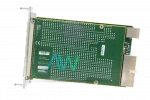
PXI-2510, 68 Channels, Hybrid Bus Connector, PXI Signal Insertion Switch Module
Rated 4.8/5 | 5 ratings
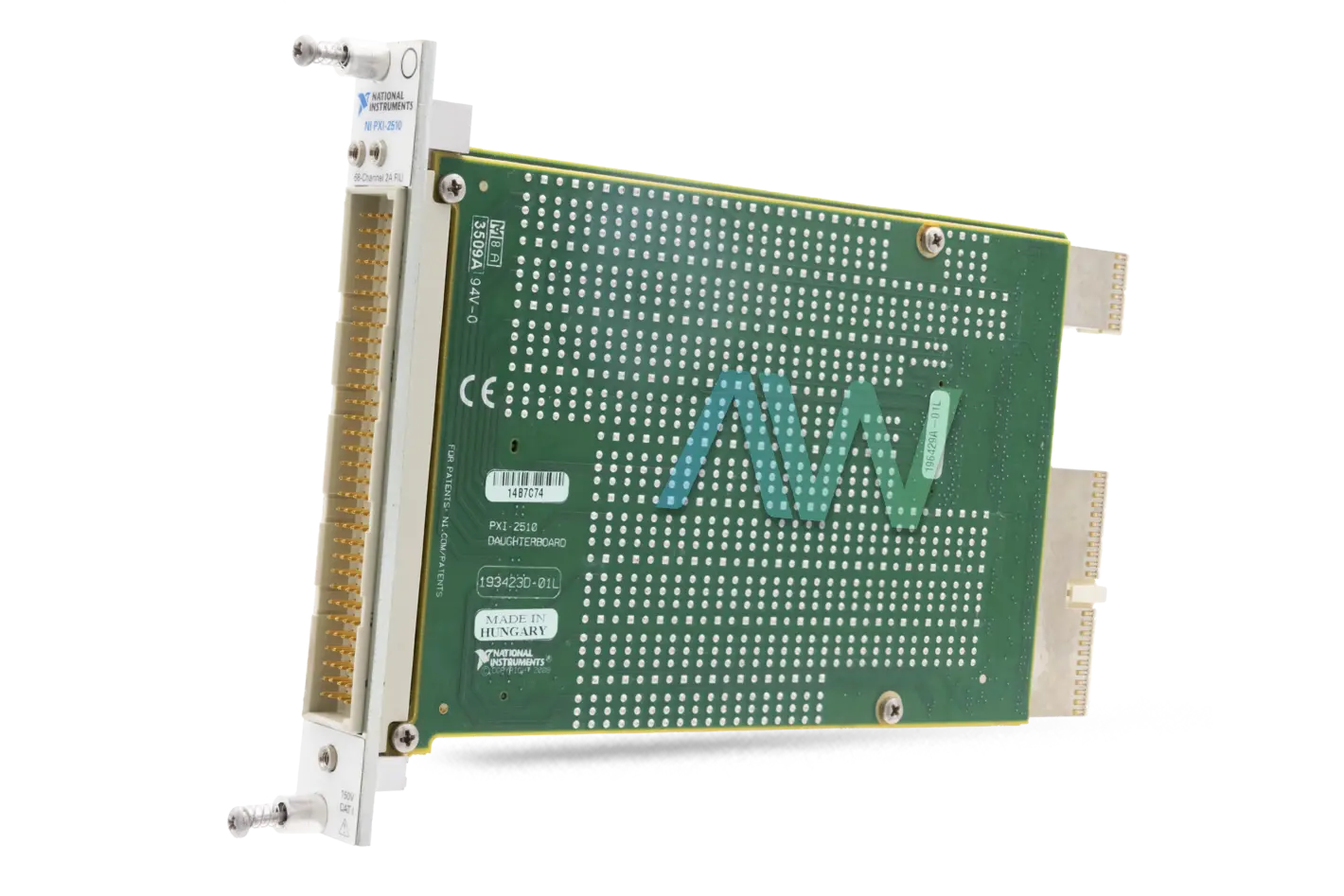
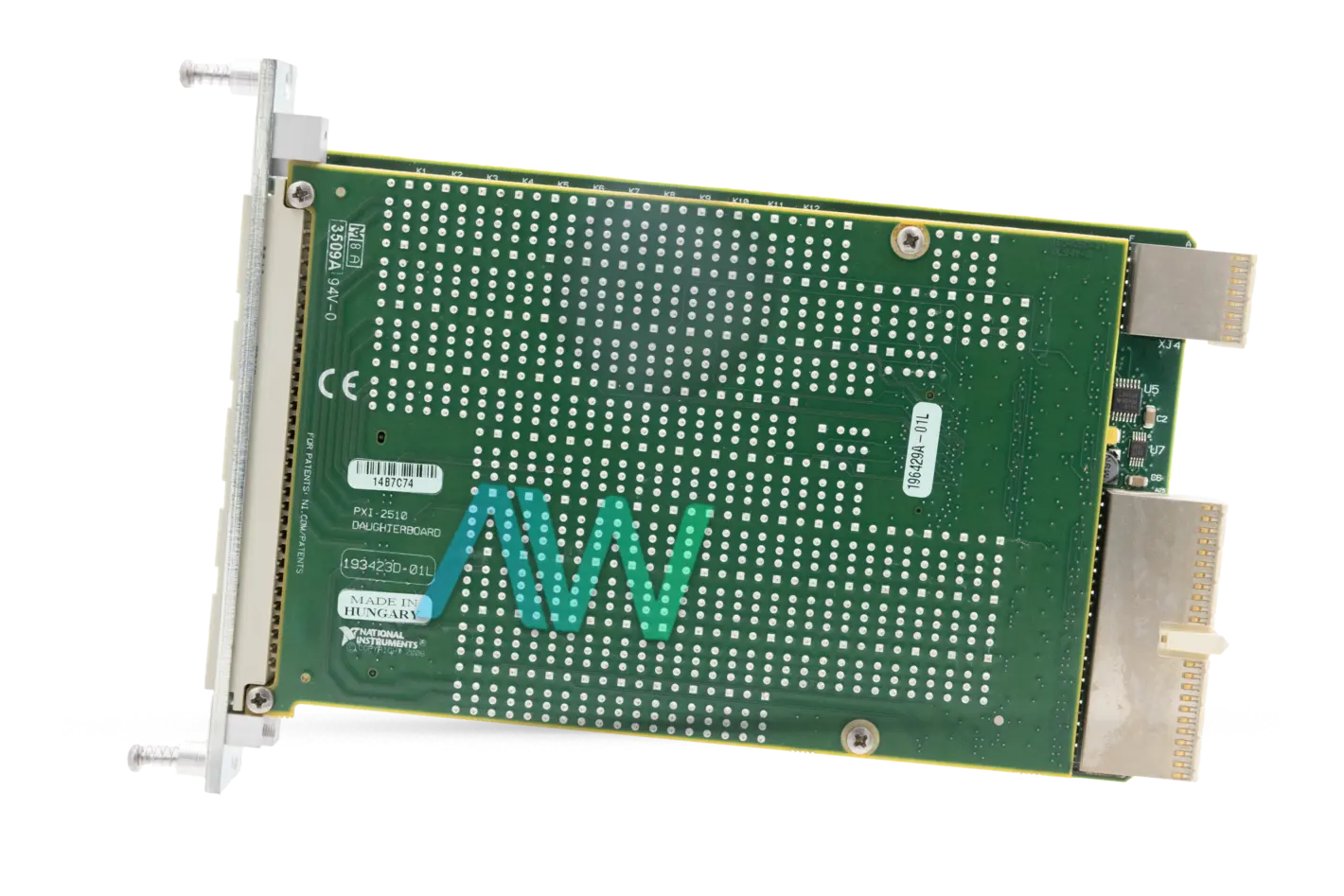

Actual item may vary if no part number is provided on quote request.
✔ 2 Year Warranty Included
✔ Free Ground Shipping
✔ NIST Calibration Available
Anonymous Verified Buyer
" Very responsive and helpful, competitive pricing. Good source! "
July 2025
Andrew Gar**** Verified Buyer
" Amazing to work with and had my order within 1 week after purchasing with all NI certs and data that were needed. "
March 2025
Said Sai**** Verified Buyer
" Competent contact for highly specialized components. The support team is very knowledgeable. Many thanks for the help and the fast shipping! "
January 2025
Bob C**** Verified Buyer
" Jason was able to get our emergency situation taken care of quickly and professionally. "
May 2025
Gregg Flecki**** Verified Buyer
" Great service and great products. This is my 2nd time using Apex Waves, truly impressed. "
January 2025

Carol Zimme**** Verified Buyer
" Very responsive and helpful, competitive pricing. Good source! "
July 2025
Andrew Gar**** Verified Buyer
" Amazing to work with and had my order within 1 week after purchasing with all NI certs and data that were needed. "
March 2025
Said Sai**** Verified Buyer
" Competent contact for highly specialized components. The support team is very knowledgeable. Many thanks for the help and the fast shipping! "
January 2025
Bob C**** Verified Buyer
" Jason was able to get our emergency situation taken care of quickly and professionally. "
May 2025
Gregg Flecki**** Verified Buyer
" Great service and great products. This is my 2nd time using Apex Waves, truly impressed. "
January 2025
National Instruments PXI-2510 PXI Signal Insertion Switch Module
The National Instruments PXI-2510 (part numbers: 778572-10, 196429A-01L) is a 2 A, 68-channel, PXI signal insertion switch module. This fault insertion unit (FIU) is an ideal solution for electronic reliability tests and hardware-in-the-loop (HIL) applications. The NI PXI-2510 comes equipped with a set of feedthrough channels. With the help of these feedthrough channels, the user can short or open one or multiple fault buses. The bus connector is a PXI Hybrid type, ensuring optimal connectivity. This architecture can also be used for the simulation of interrupted or open connections, as well as shorts to battery voltages, shorts between pins, and shorts to ground on an independent, per-channel basis. When the NI PXI-2510 is controlled via the LabVIEW Real-Time Module, it becomes an ideal solution for the validation of FADECs, engine control units (ECUs), and various other control systems.
With digital filtering disabled, this Signal Insertion Switch Module can recognize pulse widths as narrow as < 150 ns. The National Instruments PXI-2510 features a non-latching electromechanical relay with a 1 ms actuation time (typical) and a 1×10⸠cycle expected mechanical relay life. The expected electrical relay life of the PXI-2510 relay is 5×10âµ cycles at 30 V, 1 A, and 1×10âµ cycles at 30 V, 2 A. The front panel of this switch module is a 160-pin DIN 41612 male that can offer 160 positions. As far as its physical characteristics are concerned, the PXI-2510 is a 3U, one-slot PXI module weighing around 12.6 oz., with dimensions of 18.8 cm × 2.0 cm × 13.0 cm. While operating at 5 V, this switch module consumes 6.6 watts of power.
Environmentally, the switch module should be operated in temperatures of 0 °C to 55 °C, while it can be safely kept in storage temperatures of -40 °C to 70 °C. Designed for indoor use only, the PXI-2510 has a pollution degree of 2 and can be operated at altitudes up to 2,000 m. The relative humidity is noncondensing, ranging from 5% to 85%.
| Model | PXI-2510 |
|---|---|
| Manufacturer | National Instruments |
| Part Numbers | 778572-10, 196429A-01L |
| Type | PXI Signal Insertion Switch Module |
| Channels | 68 |
| Switch Bandwidth | 20 MHz |
| Maximum Pulse Width | 150 ns |
| Relay Type | Electromechanical (non-latching) |
| Front Panel Connector | Male 160 DIN 41612 |
| Maximum Switching Power | 60 W |
| Operating Temp Range | 0 °C to 55 °C |
| Storage Temp Range | -40 °C to 70 °C |
| Dimensions | 7.4 x 0.8 x 5.1 in. |
| Weight | 12.6 oz. |
| Warranty | 2-3 Year Warranty |
| PXI-2510 Manual | User Manual and Maintenance Manual Available for Download |
| Price | Request a Quote |
Associated part numbers for PXI-2510:
National Instruments PXI-2510 Frequently Asked Questions
Question: What type of front panel connector does the PXI-2510 have?
Answer: The Signal Insertion Switch Module has a 160 DIN 41612, 160-position, male front panel connector.
Question: What is the switch bandwidth of the module?
Answer: The NI PXI-2510 has a 20 MHz switch bandwidth.
Question: What is the maximum switching voltage for the PXI-2510?
Answer: The maximum switching voltage is 150 V channel-to-channel and 150 V, CAT 1, channel-to-ground.
Question: What is the price of the NI PXI-2510?
Answer: Request a Quote from Apex Waves for pricing and availability!
NI-PXI-2510-SPECIFICATIONS.PDF
PXI-2510-LETTER-OF-VOLATILITY.PDF
OS Compatibility: …
Delivery:
No hassle return policy.
Dedicated customer service team.
Payment:







Receive Price & Availability Today!
Ask About Our Tiered Calibration Levels
Option & Modules:
Confirm Your Requirements or Versions
Cost & Lead Time Available Upon Request for Service
Repair Evaluation: $150
Common Typos: