Anonymous Verified Buyer
" Very responsive and helpful, competitive pricing. Good source! "
July 2025
myRIO-1950, 8 Analog Input, 4 Analog Output, 32 Digital I/O, myRIO Educational Embedded Device for Students
Rated 4.8/5 | 8 ratings
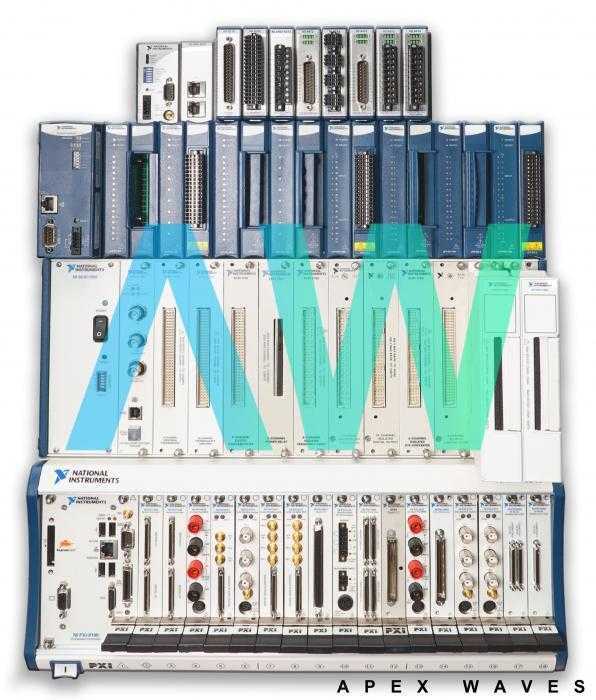
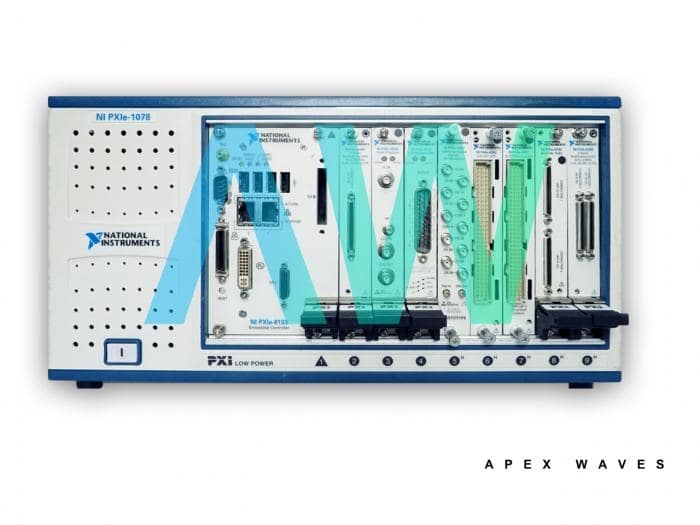
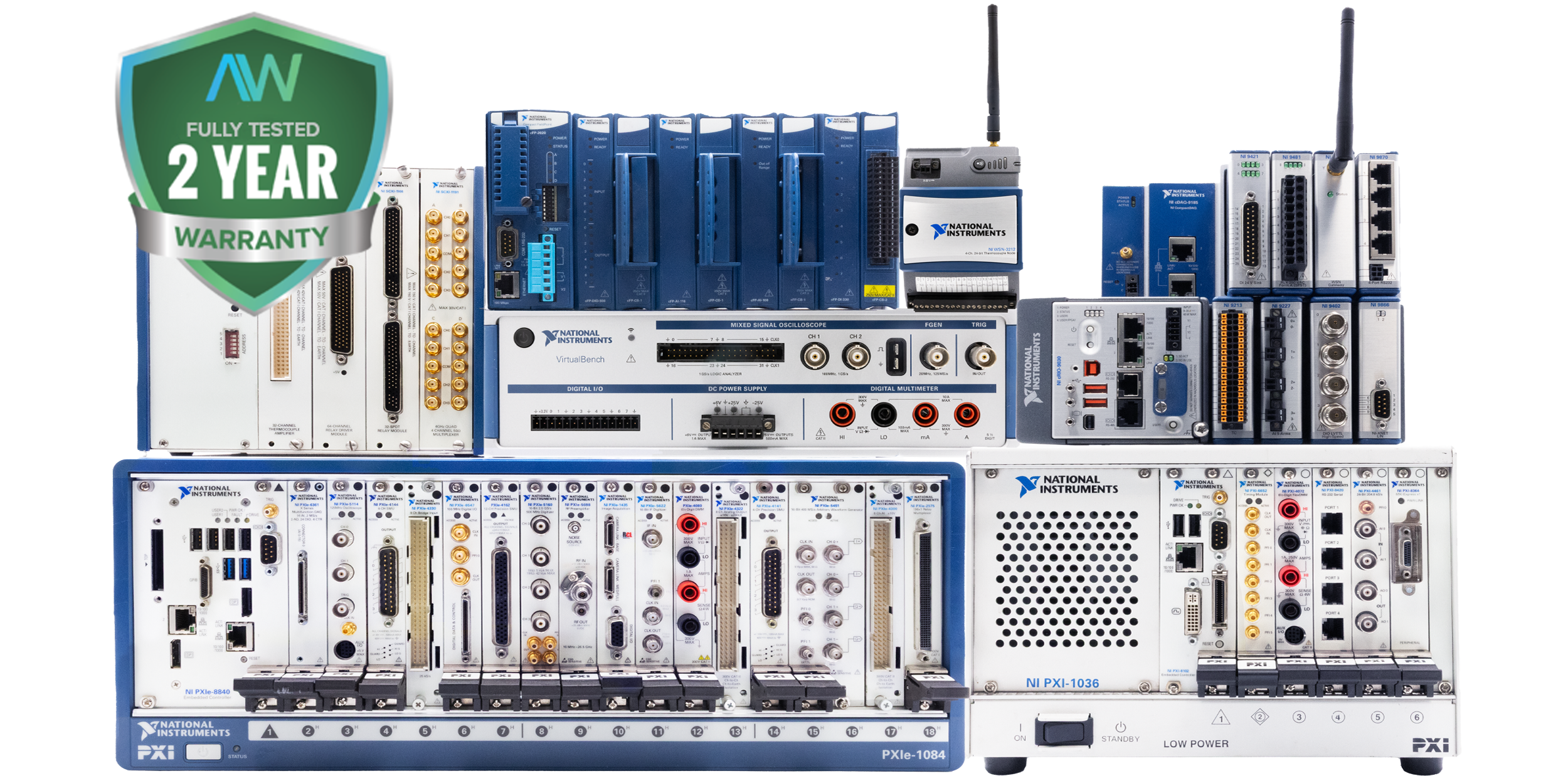
Actual item may vary if no part number is provided on quote request.
✔ 2 Year Warranty Included
✔ Free Ground Shipping
✔ NIST Calibration Available
Anonymous Verified Buyer
" Very responsive and helpful, competitive pricing. Good source! "
July 2025
Andrew Gar**** Verified Buyer
" Amazing to work with and had my order within 1 week after purchasing with all NI certs and data that were needed. "
March 2025
Said Sai**** Verified Buyer
" Competent contact for highly specialized components. The support team is very knowledgeable. Many thanks for the help and the fast shipping! "
January 2025
Bob C**** Verified Buyer
" Jason was able to get our emergency situation taken care of quickly and professionally. "
May 2025
Gregg Flecki**** Verified Buyer
" Great service and great products. This is my 2nd time using Apex Waves, truly impressed. "
January 2025

Carol Zimme**** Verified Buyer
" Very responsive and helpful, competitive pricing. Good source! "
July 2025
Andrew Gar**** Verified Buyer
" Amazing to work with and had my order within 1 week after purchasing with all NI certs and data that were needed. "
March 2025
Said Sai**** Verified Buyer
" Competent contact for highly specialized components. The support team is very knowledgeable. Many thanks for the help and the fast shipping! "
January 2025
Bob C**** Verified Buyer
" Jason was able to get our emergency situation taken care of quickly and professionally. "
May 2025
Gregg Flecki**** Verified Buyer
" Great service and great products. This is my 2nd time using Apex Waves, truly impressed. "
January 2025
National Instruments myRIO-1950 Embedded I/O Device for Students
Developed by National Instruments, the myRIO-1950 (Part Numbers: 782691-01, 783758-01, 783543-01, 782690-01) is an embedded reconfigurable I/O (RIO) device intended for industrial and educational use in robotics, control, and mechatronics systems. It provides a flexible framework for using a single device to teach and apply different design concepts. The myRIO-1950 is a feature-rich device with eight analog inputs, four analog outputs, and 32 digital I/O lines split between two MXP connectors. With a precision of 12 bits, these analog inputs and outputs can process signals between 0 and 5 volts. A three-axis accelerometer is also included in the gadget for motion sensing purposes.
A dual-core ARM Cortex-A9 processor clocked at 667 MHz and a Xilinx Z-7010 FPGA provide the myRIO-1950 with its processing capability. It provides 256 MB of DDR3 memory running at a frequency of 533 MHz and 512 MB of nonvolatile memory. One of the connectivity options is a USB host connector that can accommodate USB flash drives, USB-to-IDE converters, web cameras, and machine vision cameras. Programming and data sharing are made possible through communication with a host computer via the USB device connector.
The MXP connections enable expansion capabilities by giving access to digital I/O lines, UART communication lines, analog input and output channels, and supplementary digital functionalities like SPI, I2C, PWM, and quadrature encoder input. The digital I/O lines of the myRIO-1950 have logic levels compatible with 5V LVTTL input and 3.3V LVTTL output, and each line can be separately programmed as an input or an output. Pull-up resistors are a part of every DIO line that guarantee consistent signal integrity.
A maximum aggregate update rate of 345 kS/s is supported by analog output channels, which additionally have ±16V overload protection. Analog input channels provide an aggregate sample rate of 500 kS/s with overvoltage protection. Students and educators may work on real engineering projects on the myRIO-1950 because of its small size, strong computing power, and easy interface with LabVIEW or C programming environments. Because of its open board design, installing and integrating it into embedded systems requiring intensive processing tasks is made simple. The learning experience is further enhanced by a library of tutorials and course materials, which makes the myRIO-1950 an excellent instrument for practical experimentation and hands-on instruction in engineering fields.
| Model Name | myRIO-1950 |
|---|---|
| Part Number(s) | 782691-01, 783758-01, 783543-01, 782690-01 |
| Processor Type | Xilinx Z-7010 |
| Processor Speed | 667 MHz |
| Processor Cores | 2 |
| Nonvolatile Memory | 512 MB |
| DDR3 Memory | 256 MB |
| DDR3 Clock Frequency | 533 MHz |
| Analog Input Resolution | 12 bits |
| USB Host Port | USB 2.0 Hi-Speed |
| Analog Input Range | 0-5 V |
| Analog Output Range | ±16 V |
| Digital I/O Logic Level | 5 V LVTTL input; 3.3 V LVTTL output |
| Maximum Analog Input Sample Rate | 500 kS/s |
Associated part numbers for myRIO-1950:
National Instruments myRIO-1950 Frequently Asked Questions
Question: Is the myRIO-1950 reconfigurable?
Answer: Yes, the device features reconfigurable capabilities.
Question: What is the memory capacity of the myRIO-1950?
Answer: The myRIO-1950 offers 256 MB of DDR3 memory clocked at 533 MHz and 512 MB of nonvolatile memory.
Question: How can I program the myRIO-1950?
Answer: You can program the myRIO-1950 using the NI LabVIEW graphical programming, LabVIEW FPGA for FPGA programming, and C/C++ for embedded programming.
Delivery:
No hassle return policy.
Dedicated customer service team.
Payment:







Receive Price & Availability Today!
Ask About Our Tiered Calibration Levels
Option & Modules:
Confirm Your Requirements or Versions
Cost & Lead Time Available Upon Request for Service
Repair Evaluation: $150
Common Typos: